Looking for the best things to do in Estepona?
Between Marbella and Sotogrande, this Mediterranean town offers a different way to experience the Costa del Sol. Its whitewashed old town, flower-lined streets, public art, long seafront promenade and proximity to Sierra Bermeja create a setting that is easy to explore and difficult to reduce to a single attraction.
Known as the Garden of the Costa del Sol, Estepona combines Andalusian heritage with a contemporary approach to public space, culture and outdoor living.
The town is compact enough to explore on foot, yet its surroundings extend from the Mediterranean to the mountains. That makes Estepona particularly suited to a day built around walking, food, art and time outdoors.
Here is how to experience it.
Explore the Article
Why visit Estepona?
Estepona has more than 320 days of sunshine a year and a Mediterranean climate that supports outdoor life throughout the seasons.
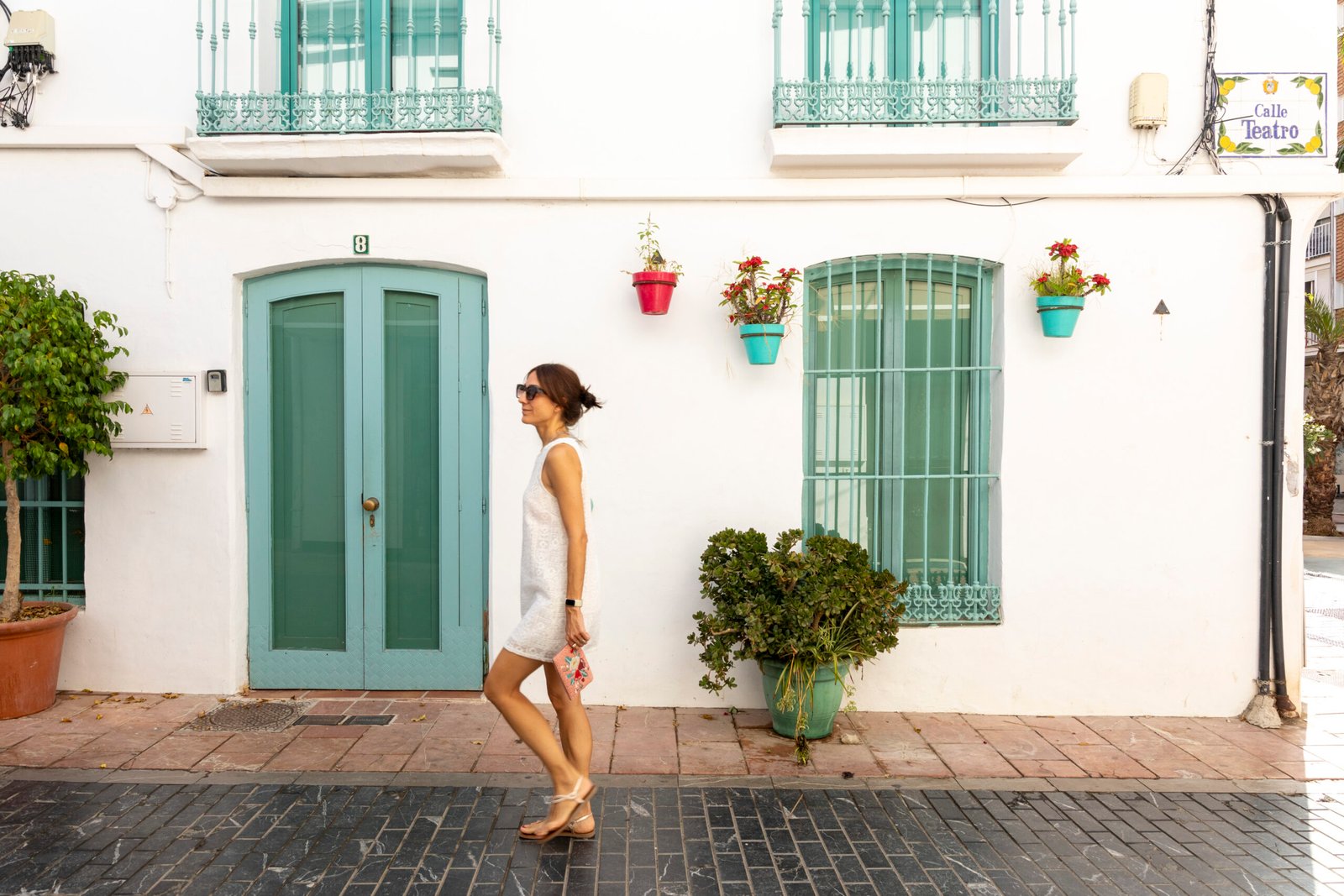
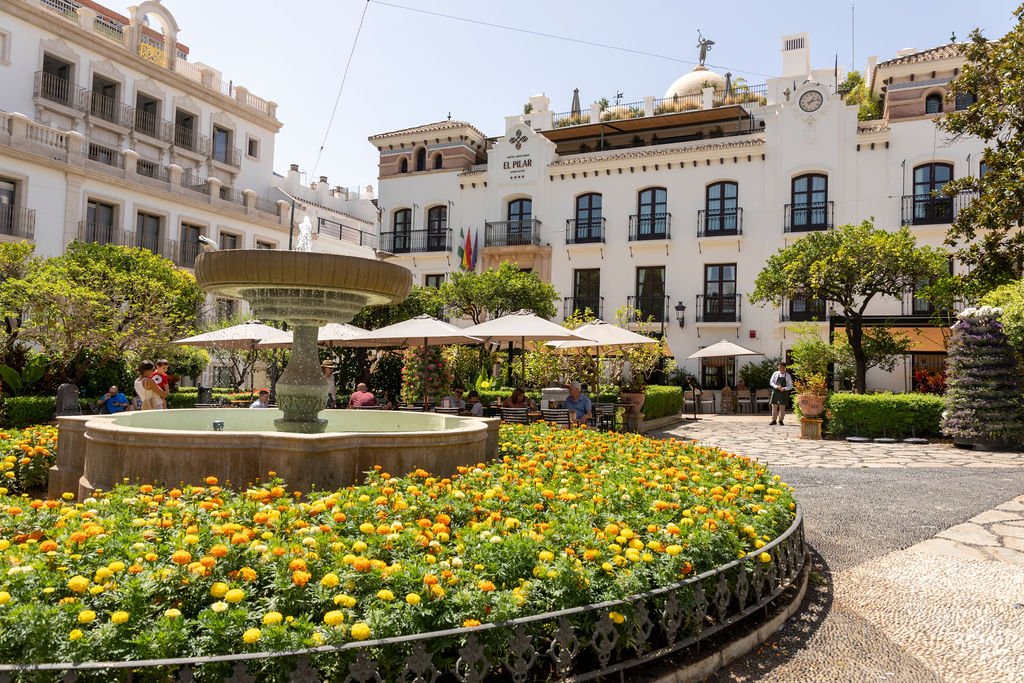
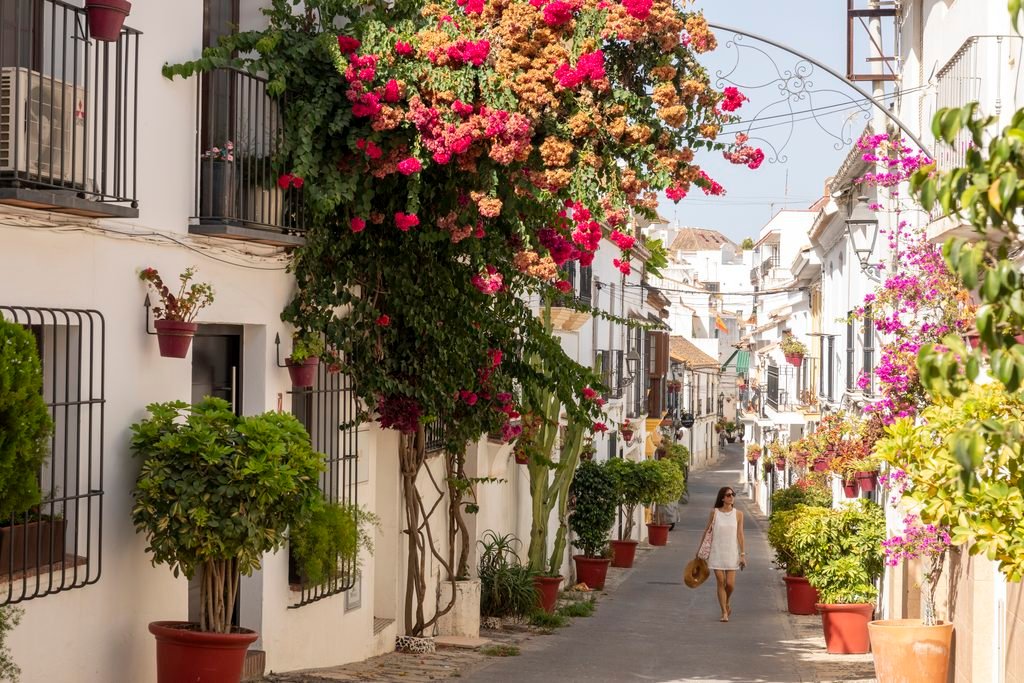
The historic centre is one of its defining features. More than 130 streets have been pedestrianised, while thousands of flower pots, small squares and whitewashed façades give the town its distinctive character.
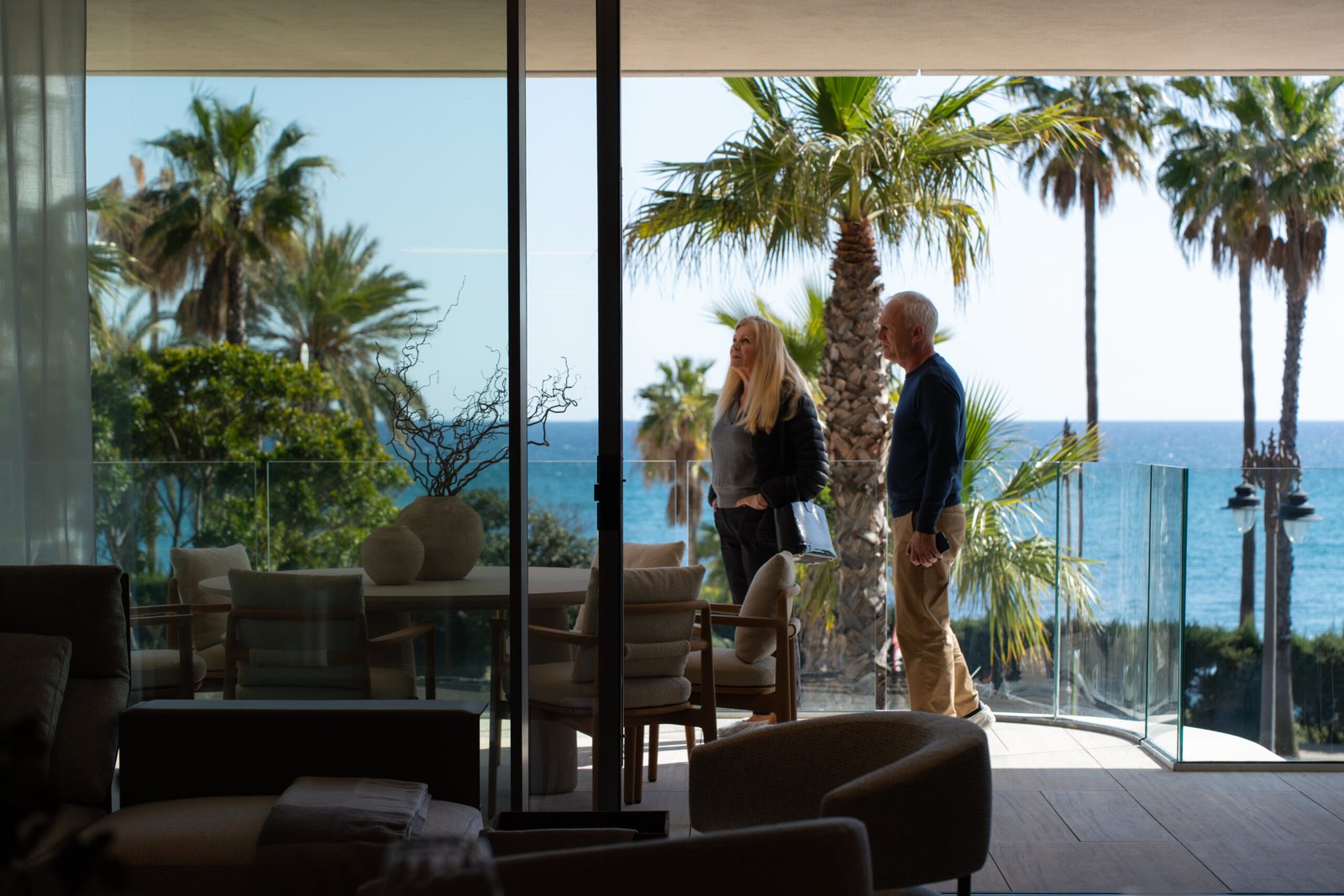
Beyond the old town, the seafront opens towards the Mediterranean. The Senda Litoral provides a long coastal route for walking and cycling, while Sierra Bermeja rises behind the town.
This proximity between sea, town and mountain is one of Estepona's defining qualities.
Start in Estepona Old Town
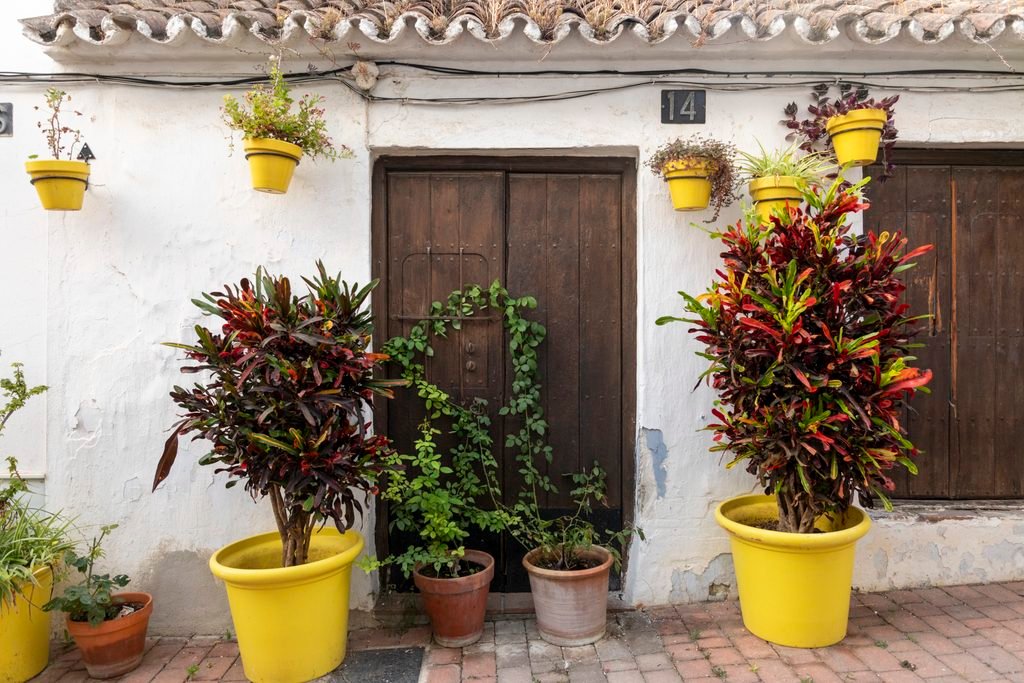
Begin the day in the historic centre.
The streets around Calle Murillo, Calle Aurora and Calle Los Reyes are among the most atmospheric places to walk. White façades, coloured flower pots and small details reveal the character of the old town without the need for a fixed itinerary.
Continue towards Plaza de las Flores, one of the town's central meeting points.
Nearby, the Church of Los Remedios adds another layer of local history. The surrounding streets are best explored slowly, without trying to cover too much ground.
For breakfast or coffee, the centre offers several independent cafés and bakeries.
The aim is simple: walk, observe and let the town set the rhythm.
Explore Estepona's murals and open-air art
Art is part of everyday life in Estepona.
The town's Open-Air Museum brings large-scale murals into the residential streets, with more than 60 works distributed across different parts of the city. Poetry, sculpture and other public artworks continue the experience beyond the main mural route.
Rather than being contained within a conventional gallery, the collection forms part of the urban fabric.
It is worth allowing time to discover the works independently. Some are found on prominent façades. Others appear as you move through quieter residential streets.
For visitors interested in architecture, photography or contemporary culture, this is one of the most distinctive things to do in Estepona.
Visit the Orchidarium and Plaza de las Flores
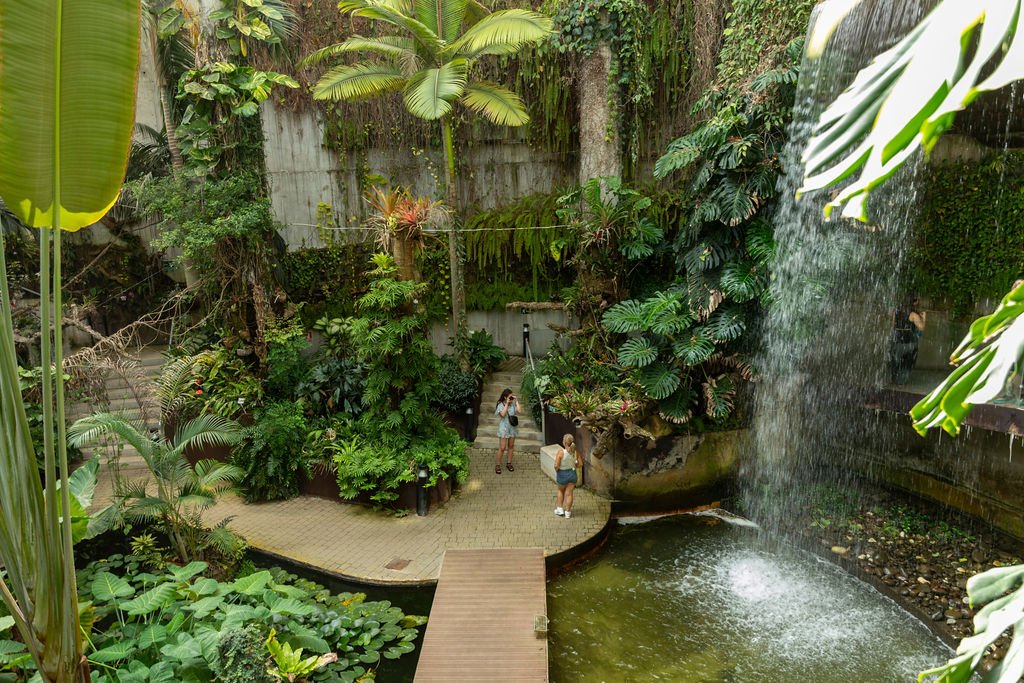
The Orchidarium Estepona offers a change of pace.
Located in the centre of town, the botanical space is built around a large glass dome, waterfalls and a collection of orchids and other plant species. Tyrian's own guide to Estepona describes it as one of the town's distinctive botanical attractions.
From here, return towards Plaza de las Flores and continue through the surrounding streets.
This part of Estepona works particularly well in the morning, when the streets are quieter and the natural light brings out the textures of the façades, stone and vegetation.
Walk along the Estepona seafront
From the old town, make your way towards the Mediterranean.
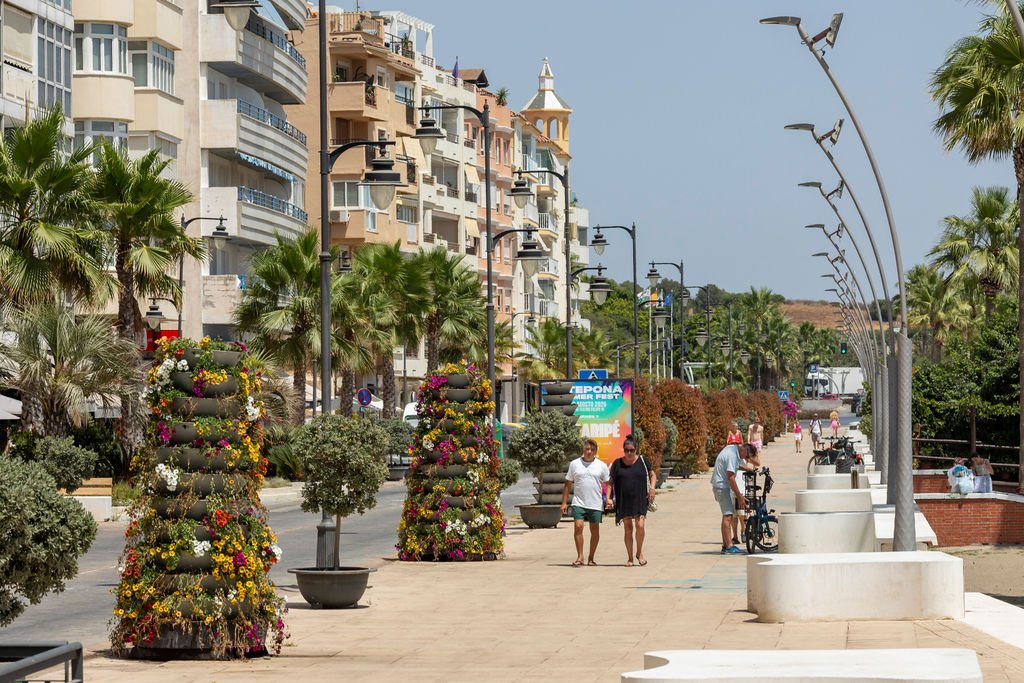
The seafront promenade provides a continuous setting for walking, cycling and stopping by the water. The Senda Litoral already connects more than 20 kilometres of coastline, creating one of the easiest ways to experience Estepona outdoors.
The promenade changes throughout the day.
Morning light brings a different atmosphere from late afternoon, when the Sierra Bermeja landscape begins to change colour behind the town.
For a longer walk, continue towards the marina. For a slower afternoon, simply follow the coastline and stop whenever the view invites you to.
Where to have lunch in Estepona

Food is an important part of experiencing the town.
Estepona's restaurant scene ranges from traditional Andalusian cooking and seafood to contemporary Mediterranean cuisine. Local specialities include fresh fish, seafood, tapas and dishes influenced by the region's agricultural traditions.
For a broader guide to local cuisine, see our guide to Andalusian food in Estepona, covering traditional restaurants, seafood and modern interpretations.
For those looking for a meal by the sea, Estepona also has a growing selection of beach clubs and beachfront restaurants. Our guide to Estepona beach clubs explores some of the addresses worth knowing.
The choice depends on the rhythm of the day.
A long lunch can become the centre of the afternoon. A lighter meal leaves more time for walking.
Spend the afternoon between coast and mountain
One of the most interesting things to do in Estepona is to change environments without travelling far.
The Mediterranean is only one part of the landscape.
Behind the town, Sierra Bermeja rises towards the mountains. Routes around Peñas Blancas move from the coast into pine forests, mountain roads and open viewpoints.
For walkers and cyclists, this creates an unusual combination.
A morning can begin beside the sea and continue into the mountains. The landscape changes quickly, from urban coast to woodland and higher terrain.
Cycling in Estepona
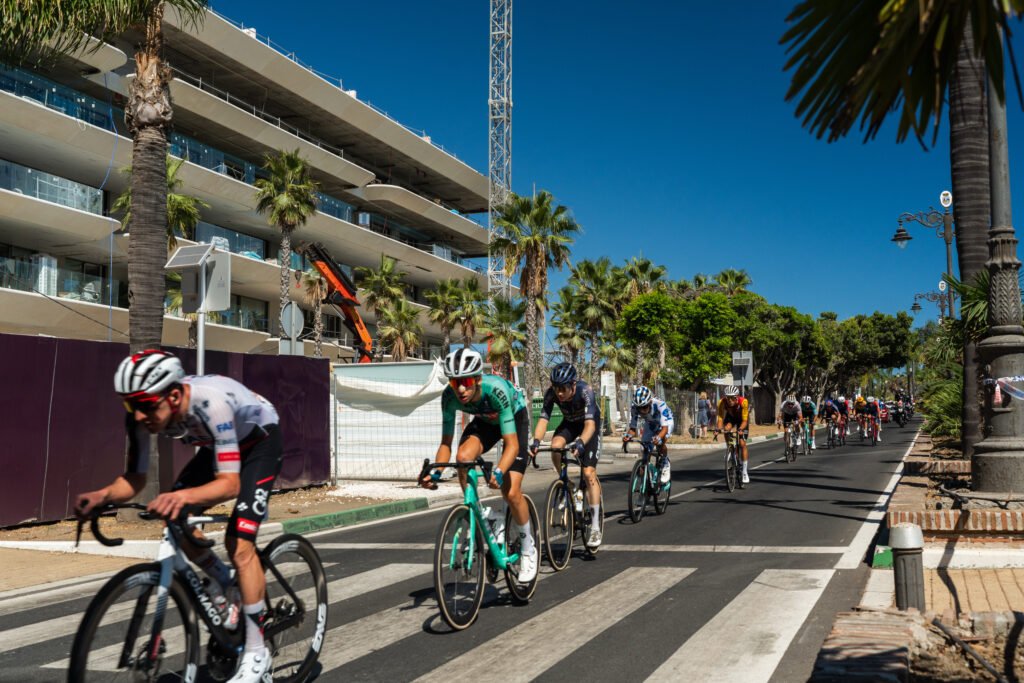
Cycling has become another way to experience the geography of the area.
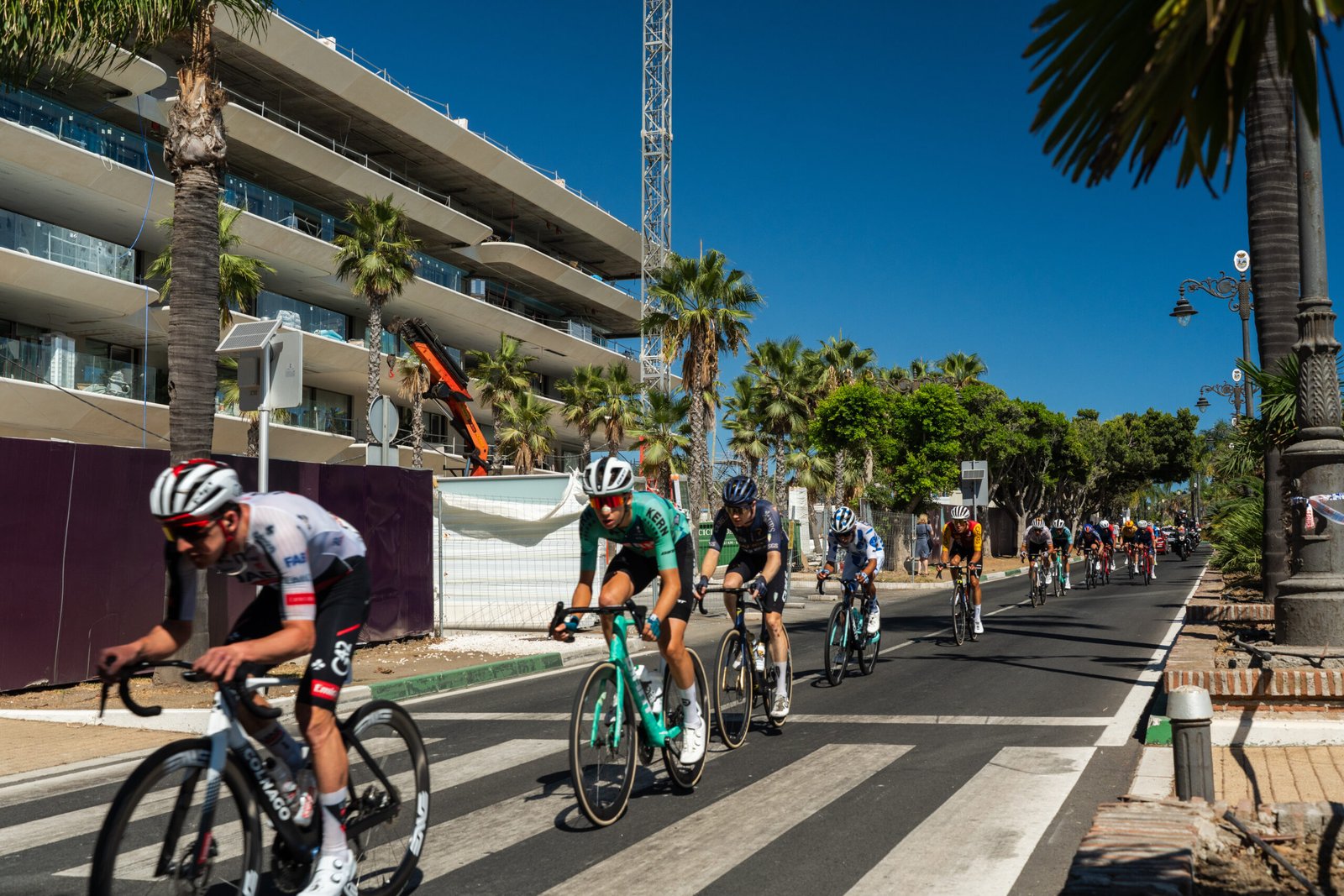
The return of La Vuelta to Estepona in 2026 brought particular attention to the route towards Peñas Blancas. The final climb covered 18.7 kilometres, with 1,216 metres of elevation gain and a finish at 1,268 metres above sea level.
For visitors, the significance goes beyond the race.
The same roads connect the coast with Sierra Bermeja throughout the year. Coastal cycling, mountain routes and quieter trails create options for different levels of activity.
For a deeper look at the landscape, read La Vuelta in Estepona: A Different Way to Experience the Costa del Sol.
Discover Mirador del Carmen
Back in town, continue towards Mirador del Carmen.
The complex combines views over the Mediterranean with cultural and civic spaces. It provides another perspective on the relationship between Estepona and the sea.
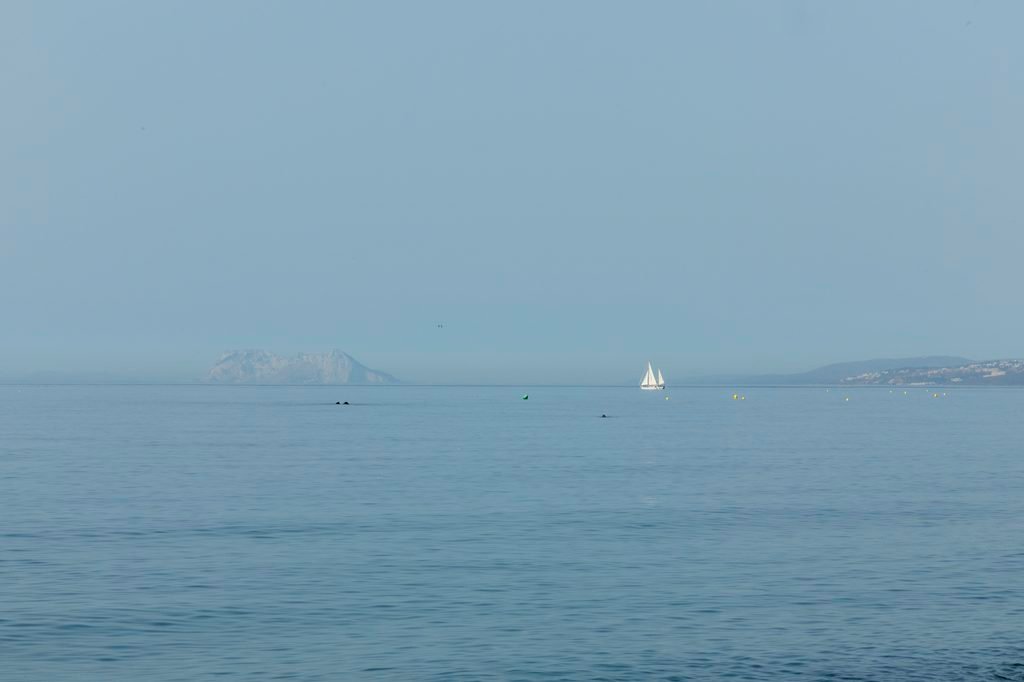
From here, the coastline opens towards the horizon while the historic centre remains within walking distance.
It is a useful point to pause before continuing towards the promenade or marina.
Spend time on the beach
Estepona has around 29 kilometres of coastline, with different beaches offering different settings. Playa de la Rada is the central urban beach, while Playa del Cristo is a sheltered option with shallower water.
The beach does not need to be the entire purpose of the day.
A short swim, a walk along the shore or an hour under the sun can be enough.
For those who prefer a more structured setting, Estepona also has several beach clubs along the coast, with options for lunch, swimming and an afternoon beside the sea.
Where to eat in Estepona at night

As the temperature falls, return towards the seafront or historic centre.
Estepona's evening dining scene includes traditional Andalusian restaurants, seafood addresses, Mediterranean kitchens and contemporary venues.
For a detailed selection, see our Best Restaurants in Estepona 2026 guide.
For a more focused selection, our guide to fine dining by the sea looks at restaurants where the setting is part of the experience.
Near Tyrian Residences, Malva Beach brings together Mediterranean cooking and a beachfront setting on Playa de La Rada.
The evening can end with a walk beside the water rather than a return to the car.
Golf in Estepona
Golf is part of the landscape of the Costa del Sol, and Estepona offers a particularly strong choice of courses within its municipality.
There are seven golf courses in Estepona, including established 18-hole layouts and shorter 9-hole options. Several combine views towards the Mediterranean with the backdrop of Sierra Bermeja.
Among the better-known options is El Paraíso Golf Club, an 18-hole course designed by Gary Player in 1973, with views towards the sea and mountains. Valle Romano Golf offers another 18-hole course, while Estepona Golf is set within the natural landscape with views of both the Mediterranean and Sierra Bermeja.
For a shorter round, La Resina Golf & Country Club and El Campanario Golf & Country House offer 9-hole formats. This makes it possible to include golf within a wider day in Estepona rather than dedicating an entire day to the course.
Just beyond Estepona, Finca Cortesin in Casares adds another option for golfers looking for an 18-hole championship course. The course was designed by Cabell B. Robinson and has hosted major international events, including the Solheim Cup in 2023.
For international visitors, golf is also one of the reasons Estepona works as a year-round destination. A morning on the course can be combined with lunch by the sea, an afternoon walk through the old town or an evening overlooking the Mediterranean.
Things to do in Estepona throughout the year

Estepona works well beyond the traditional summer season.
Spring brings mild temperatures for walking through the old town, cycling along the coast and exploring the Senda Litoral. It is also a good time to discover the town's gardens, murals and outdoor spaces before the warmer months arrive.
Autumn offers similar conditions, with quieter beaches and comfortable days for golf, hiking and cycling. The proximity of Sierra Bermeja makes it possible to move between the coast and the mountains within the same day.
Winter has its own rhythm. With a mild Mediterranean climate, Estepona remains suited to outdoor life when other European destinations are in their colder months. The historic centre, restaurants, promenade and cultural attractions continue to operate throughout the season.
Golf is another reason to visit outside summer. With several courses in and around the municipality, the area allows visitors to combine a morning on the course with lunch by the sea, a walk through the old town or an afternoon along the coast.
For international visitors, this year-round rhythm is part of Estepona's appeal. The town is not defined by a single season. Its climate, landscape and compact urban centre allow walking, dining, culture, sport and time outdoors to remain part of everyday life throughout the year.
Can you explore Estepona on foot?
Yes.
The historic centre, promenade, beaches, restaurants and many cultural attractions can be reached without a car. The relatively flat terrain also makes walking and cycling practical ways to move around the town.
This is particularly noticeable when exploring the area around the seafront.
From the coast, you can walk towards the old town, continue through the pedestrian streets and return to the Mediterranean without needing to organise transport between each stop.
For a more detailed look at the neighbourhood, see What's Within Walking Distance of Tyrian Residences in Estepona.
What to do in Estepona with children
Estepona works well for families because many activities take place outdoors.
The promenade offers space for walking and cycling. The beaches provide different settings for swimming, while parks and public spaces create room to play.
The town also offers cultural activities that are easy to combine with a day outside, including the murals, Orchidarium and sculpture routes.
For families considering a longer stay, our guide Estepona: The Best Costa del Sol Town for Families explores schools, healthcare, outdoor spaces and everyday life in greater detail.
How many days do you need in Estepona?
One day is enough to experience the historic centre, see some of the murals, walk along the seafront and enjoy a meal by the Mediterranean.
Two or three days allow more time for the surrounding landscape.
You can add Sierra Bermeja, cycling, golf, longer coastal walks, beach clubs and a slower exploration of the town itself.
For those considering Estepona as more than a destination, the experience changes again. The combination of walkability, nature, culture, services and proximity to Marbella and the wider Costa del Sol makes the town increasingly relevant to international residents and property buyers.
A simple one-day itinerary in Estepona
09:00 — Old Town
Begin with breakfast and a walk through the pedestrian streets.
10:30 — Murals and Orchidarium
Explore the Open-Air Museum before visiting the botanical gardens.
12:00 — Plaza de las Flores
Take time for coffee, architecture and the surrounding streets.
13:00 — Lunch
Choose between traditional Andalusian cooking, seafood or a restaurant by the sea.
15:00 — Seafront
Walk along the promenade or continue towards the marina.
16:30 — Beach or Mirador del Carmen
Choose between time by the water or a wider view across the Mediterranean.
18:00 — Golf, Sierra Bermeja or sunset walk
Golf is another way to experience the landscape around Estepona. The municipality has seven golf courses, ranging from 9-hole layouts to established 18-hole courses. For a shorter afternoon, choose a round of nine holes. For a full day on the course, several 18-hole options are within easy reach.
20:30 — Dinner
End the day with Mediterranean cuisine in the old town or beside the sea.
Why Estepona stays with you
The appeal of Estepona is found in the relationship between its different elements.
The old town is walkable. The coast is close. Art appears in unexpected places. Gardens and public spaces shape the streets. Sierra Bermeja provides a natural backdrop and a different landscape within easy reach.
The town has also continued to evolve.
New public spaces, cultural projects and residential developments are changing parts of the coastline while preserving the importance of outdoor life and the historic centre.
For visitors, this creates a destination that can be experienced in a single day.
For those who choose to stay longer, there is more to inhabit, observe and discover.
That may be the most interesting way to understand Estepona: not as a collection of attractions, but as a place where the Mediterranean, Andalusian heritage, contemporary design and mountain landscape exist within the same daily rhythm.
Frequently Asked Questions
What is Estepona best known for?
Estepona is known for its historic old town, flower-lined streets, public murals, seafront promenade and Mediterranean setting. It is also known as the Garden of the Costa del Sol.
Is Estepona worth visiting?
Estepona offers a combination of historic streets, beaches, public art, restaurants, gardens and access to Sierra Bermeja. It can be visited as a day trip or experienced over several days.
Is Estepona good for a day trip?
Yes. The historic centre, murals, Orchidarium, promenade and beaches can be combined into a single day without needing to travel between distant parts of the town.
Can you explore Estepona on foot?
Much of central Estepona can be explored on foot. The historic centre and seafront are particularly accessible, while the Senda Litoral provides a long coastal route for walking and cycling.
What are the best beaches in Estepona?
Playa de la Rada is the main urban beach, while Playa del Cristo offers a more sheltered setting. The wider coastline provides a variety of beaches and coastal areas.
What are the best things to do in Estepona with children?
Families can combine the beaches, promenade, parks, public art and outdoor spaces. The town's walkable layout also makes it easy to build a relaxed day without long journeys.
What can you do around Estepona?
Beyond the town, visitors can explore Sierra Bermeja, cycle towards Peñas Blancas, walk in the surrounding countryside, play golf or follow the coastline.
How many days should you spend in Estepona?
One day is enough for the main sights. Two or three days allow time for the mountains, beaches, cycling, golf and a slower exploration of the town.